
Pilot Project Confirms the Potential of Ultrafiltration for Treating Silicon-Containing Process Wastewater
Klipphausen, June 2026
Two-week pilot trial demonstrates stable filtration performance and high recovery rates
The treatment of industrial process wastewater is becoming increasingly important, particularly in the semiconductor industry. A recent pilot project on the ultrafiltration of silicon-containing process wastewater has demonstrated that reliable and economically viable treatment is possible. Over a period of two weeks, different filtration operating modes were evaluated under real process conditions.
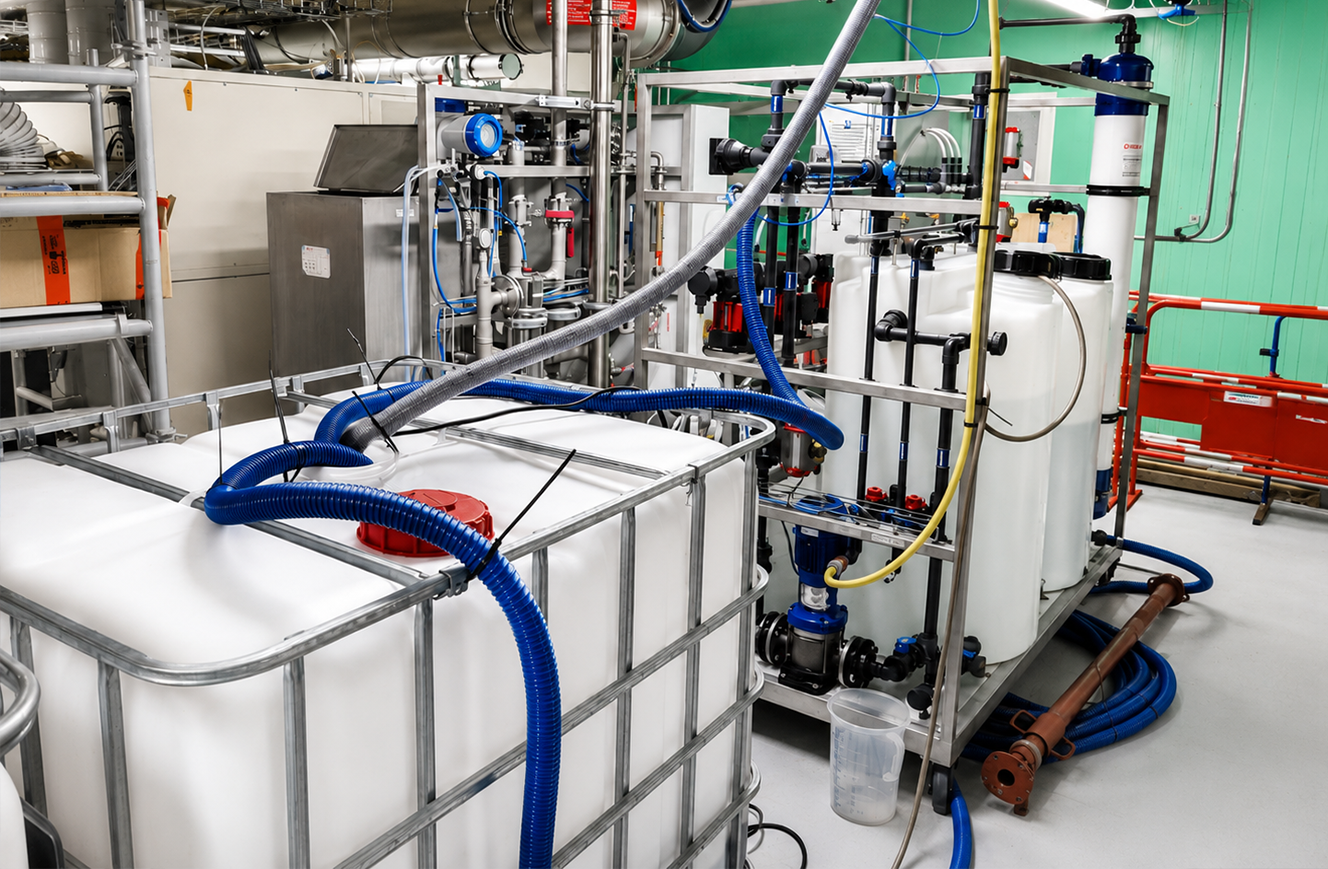
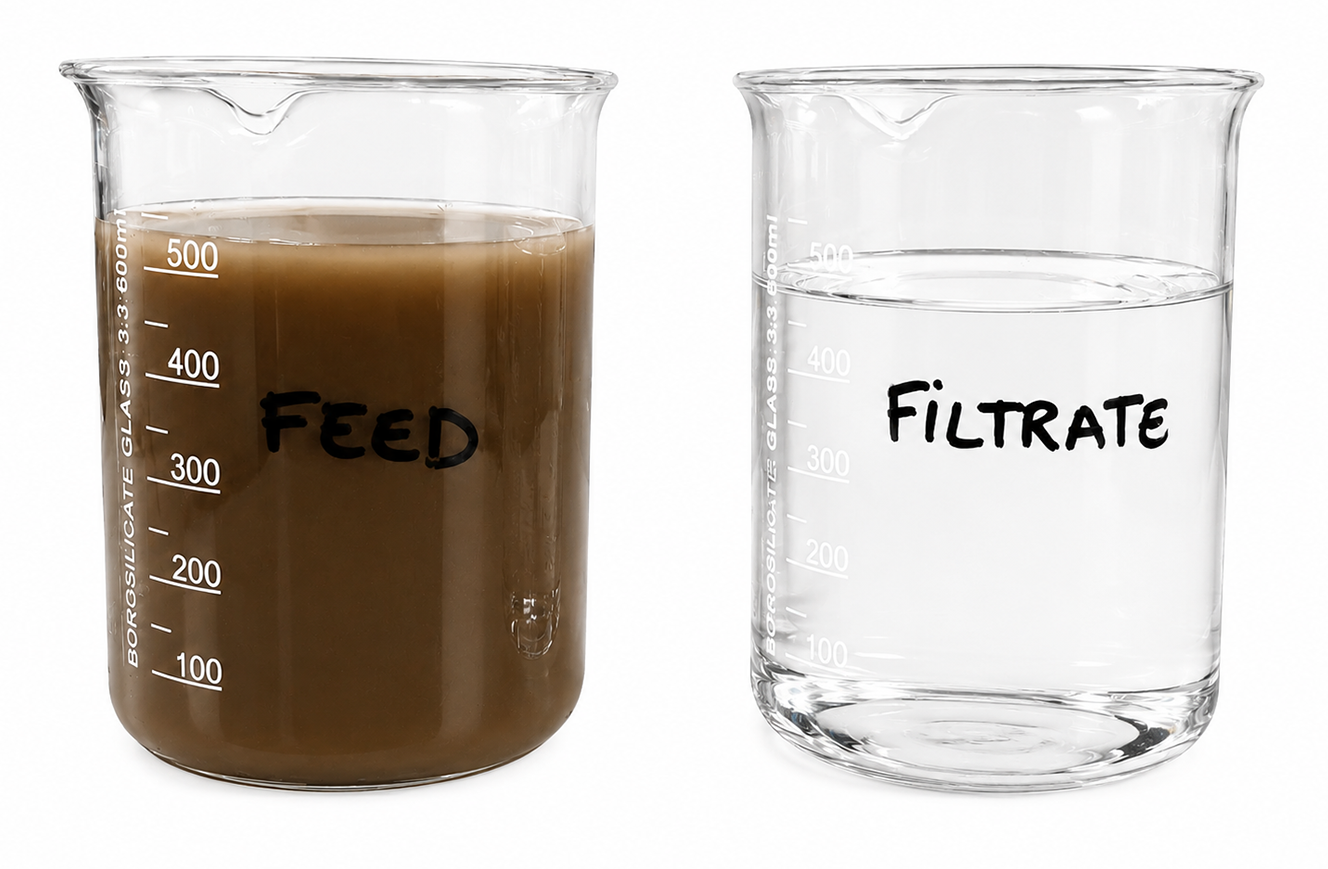
The objective was to determine how process wastewater containing silicon particles can be efficiently treated and prepared for potential reuse. The wastewater examined had a relatively low solids concentration of approximately 200–400 mg/L.
The primary goal was to maximize filtrate recovery while minimizing the volume of concentrate generated.
Both dead-end and crossflow ultrafiltration using a PVDF membrane were tested. Throughout the entire trial period, both systems operated reliably. The dead-end filtration process achieved a recovery rate of approximately 90–92%, while the crossflow process reached a recovery rate of around 80–85%.
No irreversible membrane fouling was observed during the pilot trial. Periodic backwashing effectively minimized cake layer formation, allowing stable filtration performance to be maintained throughout the test period.
Chemical cleaning of the membranes was not required at any point during the trial.
Laboratory analyses also confirmed the high quality of the produced filtrate.
In parallel, the volume of the resulting concentrate was further reduced in a separate trial using separation technology. The generated centrate can be recirculated into the ultrafiltration process, further reducing the overall wastewater volume.
The pilot trial provides a reliable basis for designing future production-scale systems. Thanks to its higher recovery rate, smaller footprint, and lower energy consumption, the dead-end ultrafiltration process proved to be a particularly promising solution for industrial applications.
Based on the process data obtained, modular system concepts with treatment capacities ranging from 2 to 15 m³/h have already been developed.